
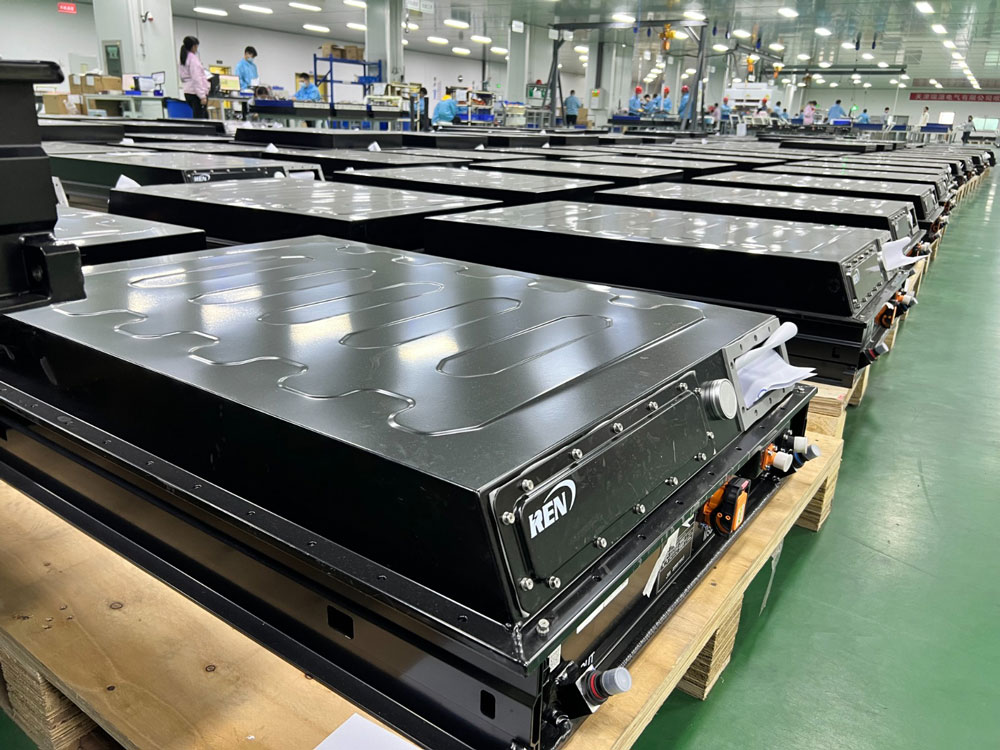

Battery Energy Storage System
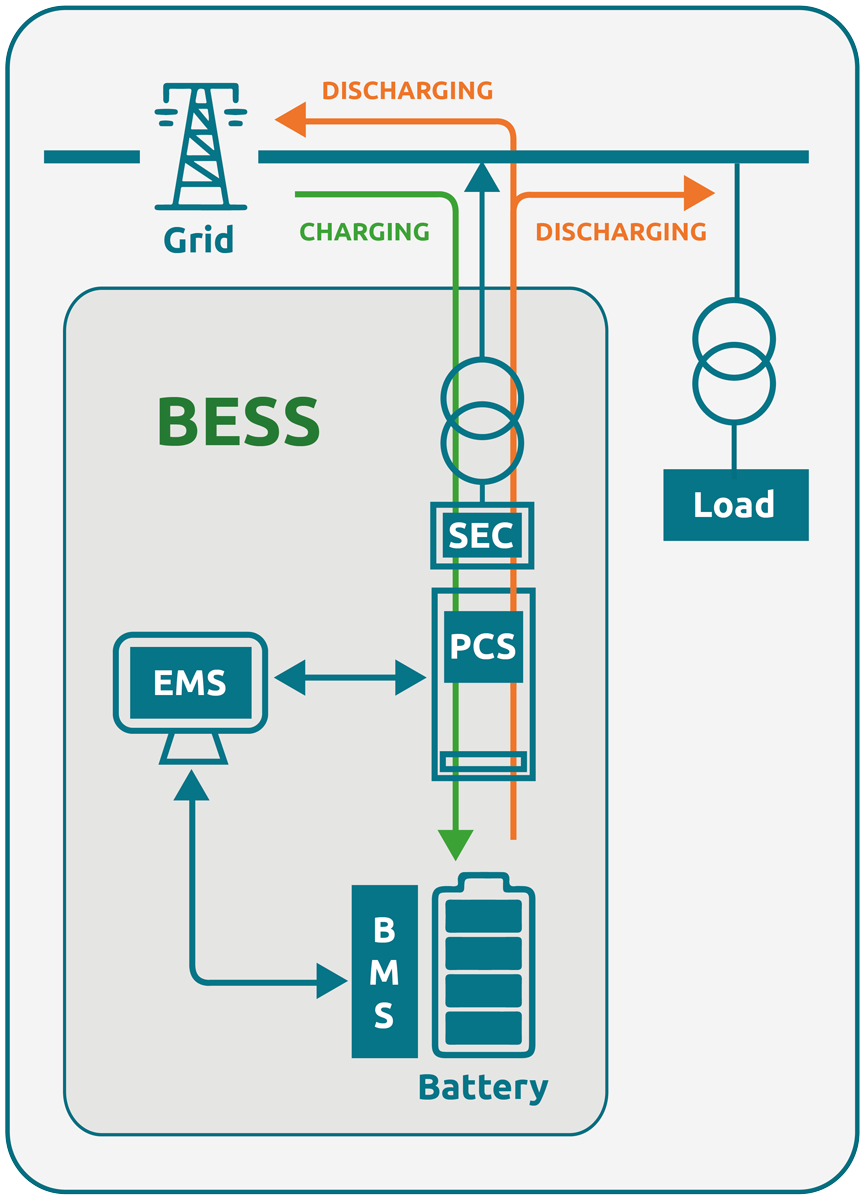
Due to the energy transition from fossil fuels to renewable energy sources where production is linked to the weather and not to demand, energy storage is an increasingly indispensable element to relieve the burden on the outdated electricity network.
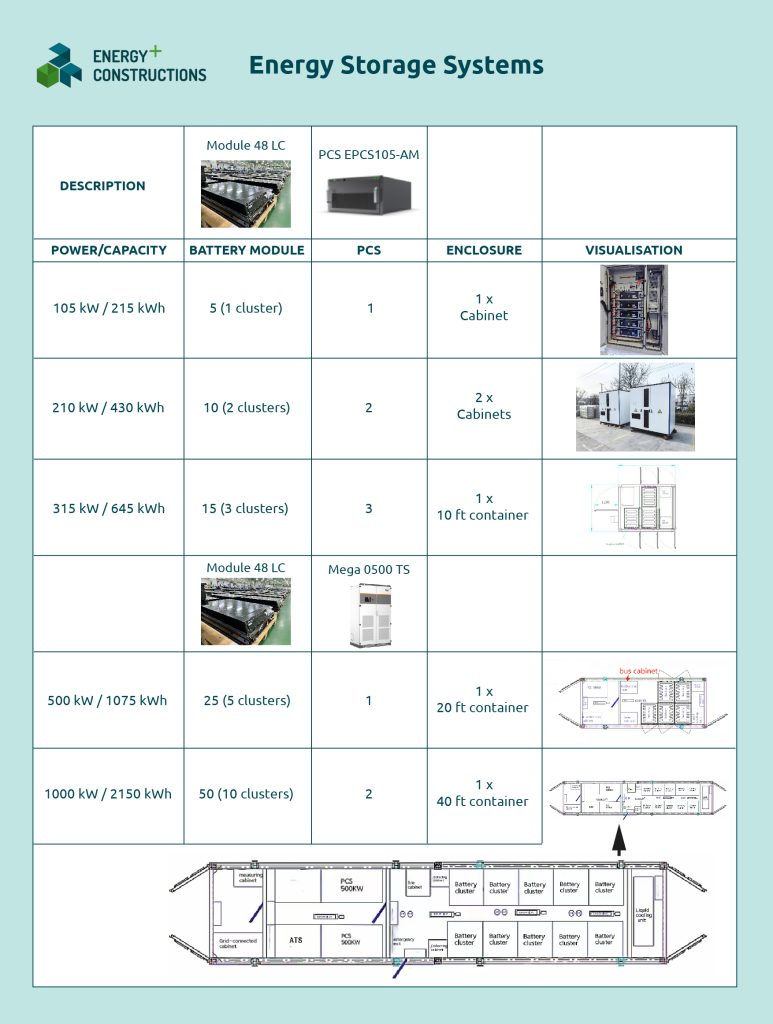
The market for energy storage systems is expected to triple by the year 2030. To meet this demand, E+C offers industrial energy storage systems from 215 kWh – 6.7 MWh in single module containers.
105 kW/215 kWh unit
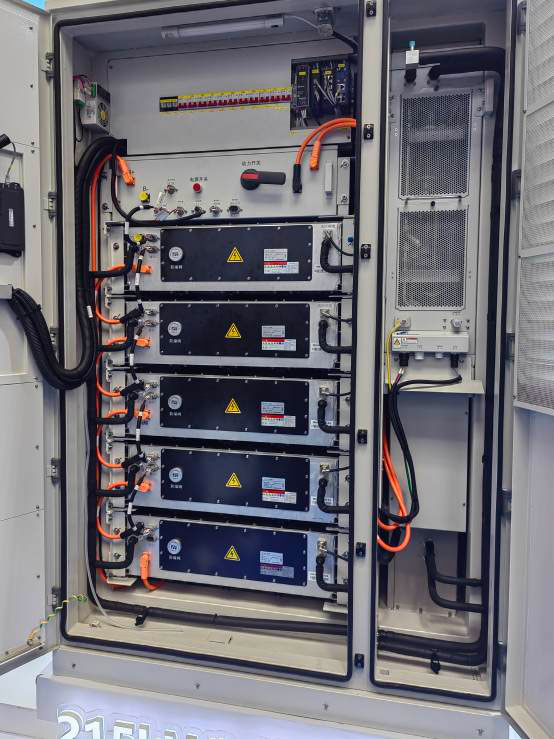
The LFP (LiFePO4) battery modules are liquid cooled/heated to ensure optimal operation and service life.
Liquid cooled-heated BESS Module
All systems are supplied with battery management (BMS) at cell level, an energy management software system (EMS) for charging and discharging strategies and safety systems such as automatic fire extinguishing installation and video monitoring. Optionally, a Smart Energy Controller (SEC) can be installed with a direct connection to the Energy spot market to earn money with the difference in daily energy hourly prices via the so-called arbitrage model.
LTO – Na-ION alternative chemistries available
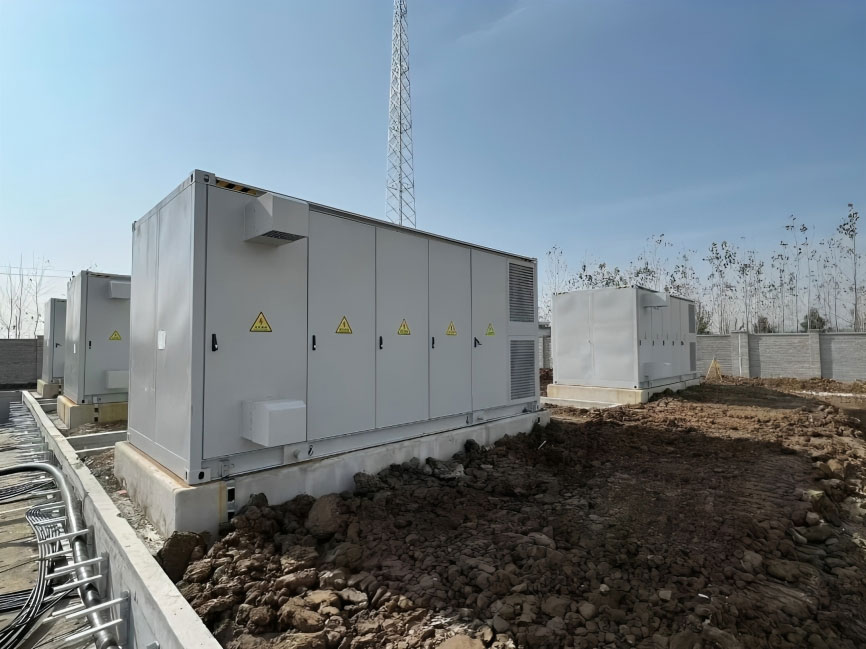
20 ft – 3,35 MWh
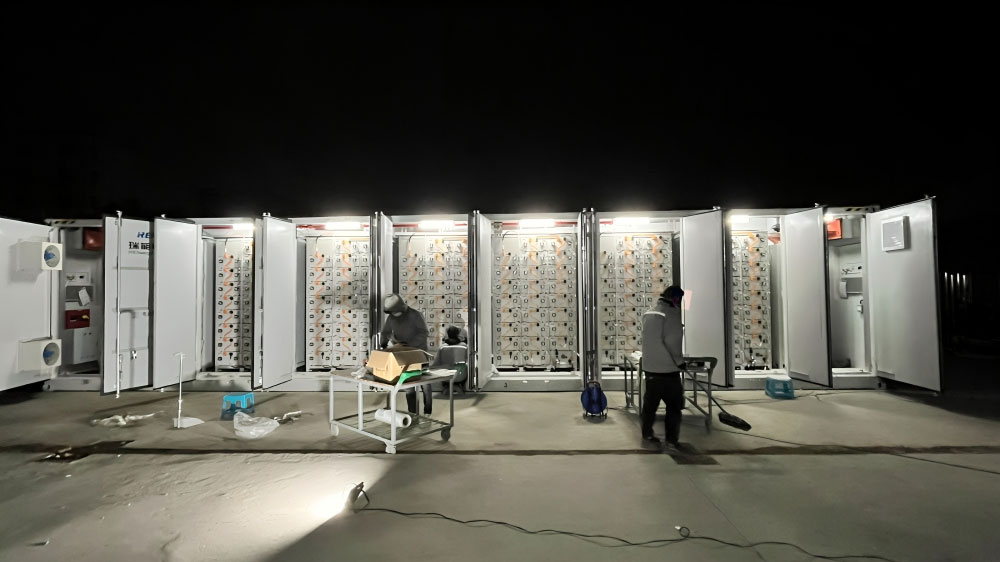
40 ft – 6,7 MWh
PCS according customer requirements LTO – Na-ION alternative chemistries available
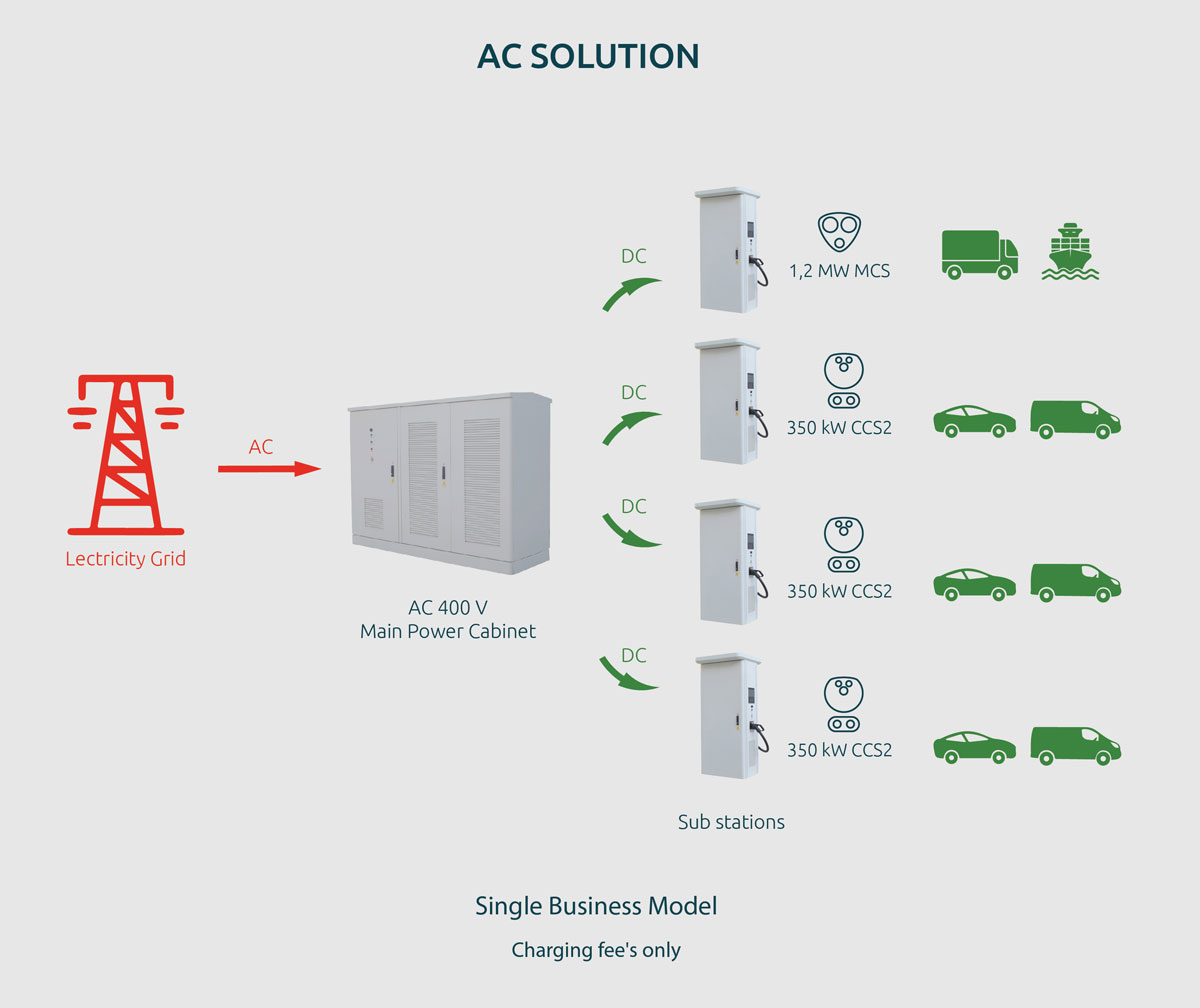
Mega Charging Solutions (MCS)
Ultra‑fast EV charging and smart energy services for commercial fleets, powered by the MCS standard
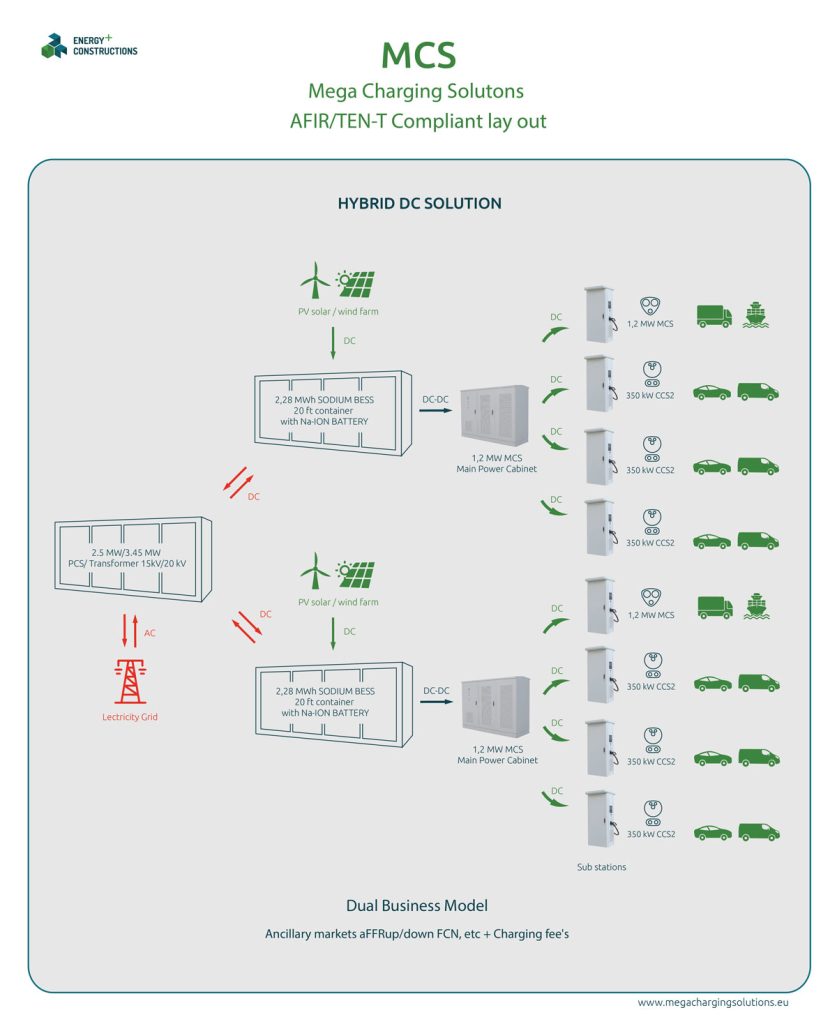
Mega Charging Solutions (MCS) delivers ultra‑fast EV charging equipment and integrated energy services for commercial fleets. Built on the new Megawatt Charging System (MCS) standard, our solutions are designed for heavy‑duty vehicles such as trucks, buses, and vans.
Key Features
- MCS standard: up to 3.75 MW DC charging for future‑proof logistics
- Commercial focus: tailored for depots, fleet operators, and long‑haul transport
- Optional BESS integration: battery energy storage systems for revenue optimization and additional income.
- Dual business model: EV charging plus Energy Grid system services for immediate revenue streams.
Why the dual income business model matters
With limited EV truck adoption today, the aFRR market provides the primary source of income, while charging infrastructure is ready for tomorrow’s growth. This dual approach ensures both financial stability now and scalable logistics solutions later.
The dual revenu business model is available for grid connections > 200 kW and with BESS integration.
Biobased Insulated Thermal Solar Solutions
Solar thermal solutions are normally insulated with mineral wool or polyurethane foam. However, these materials have very energy intensive production methods. For example, for the production of mineral wool, basalt/stone must first be liquefied like magma in a volcanic process, only after which the fiber structure can be produced.
Energy plus Constructions Sp zoo has filed a patent application for a bio-based panel insulation method in which cellulose (produced from recycled paper) replaces traditional materials.
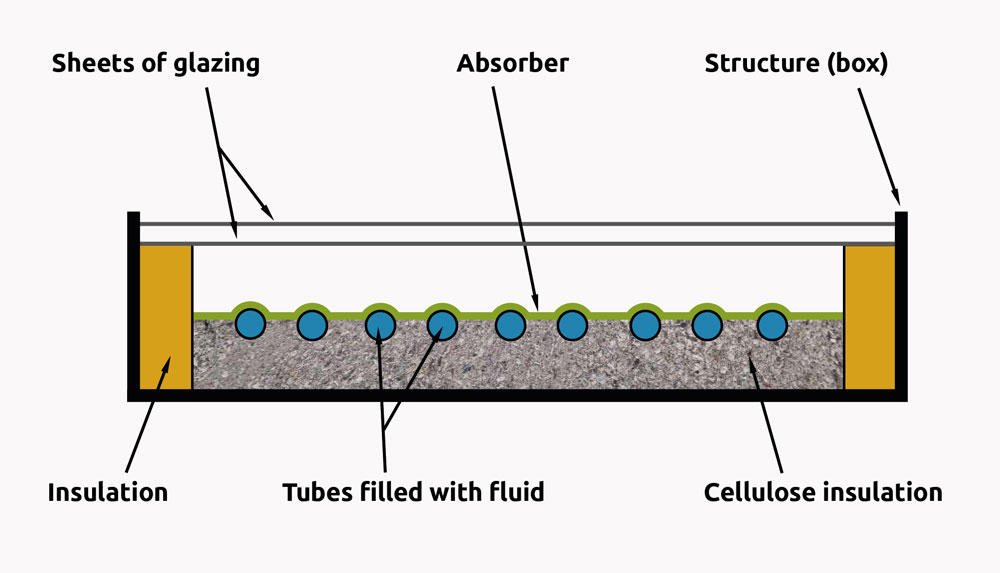
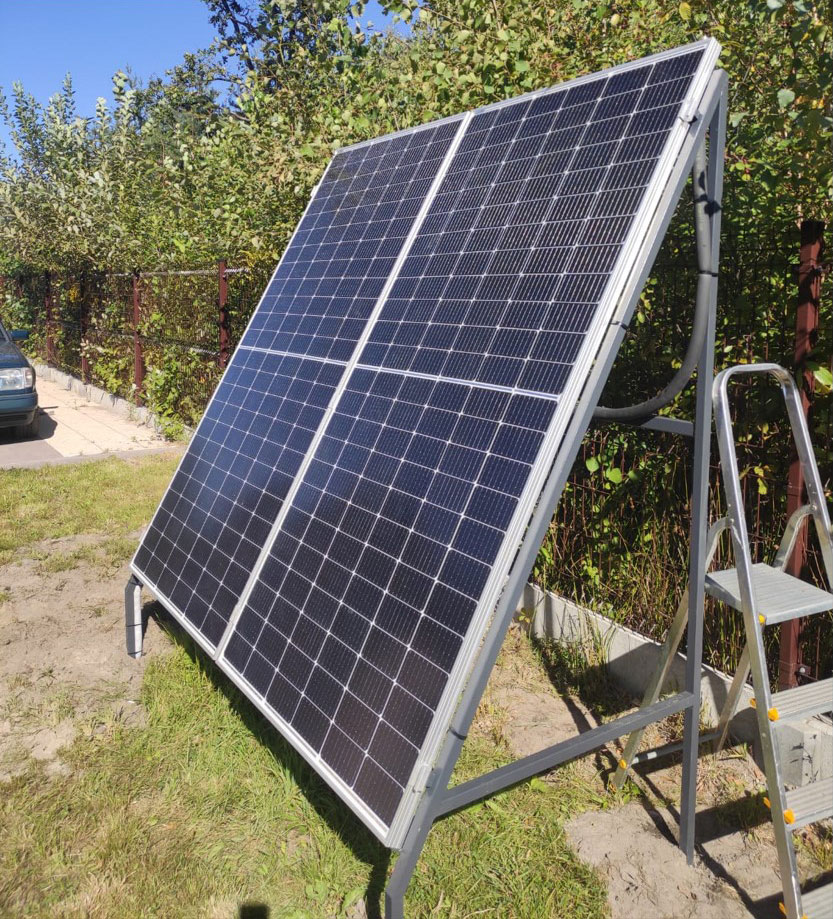
The products are Flat Panel Solar Heaters and Hybrid / PVT panels (producing electricity + heat)
Flat plate
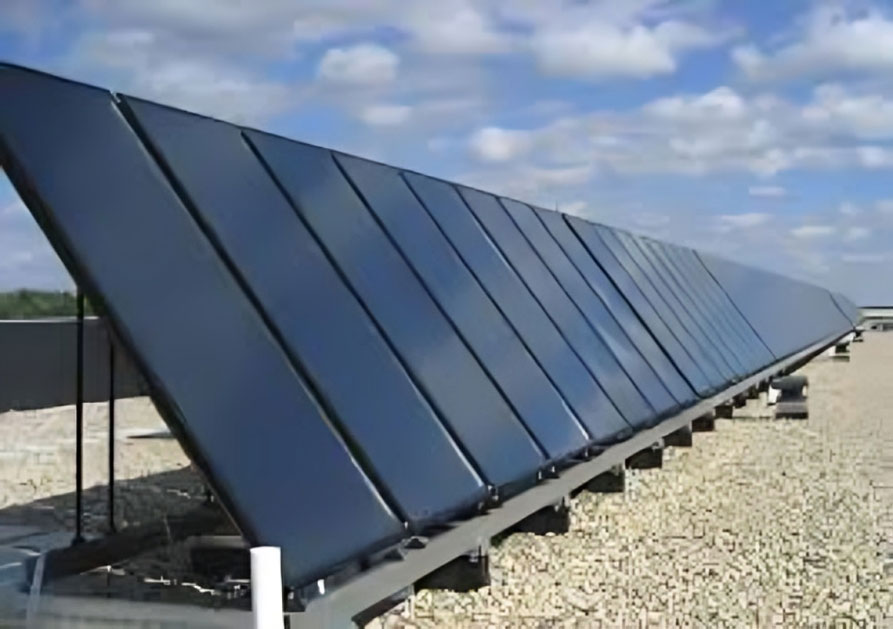
PVT Hybrid panels
Cellulose has comparable, or even better, insulation properties and, because it contains 80% wood, it is also a form of CO2 storage. For each panel, the amount of energy required to produce the insulation is approximately 23 kWh less.
| Properties | Cellulose | Mineral wool |
| Thermal conductivity/ λ (lambda) W / m . K = | 0.035 – 0.040 | 0.039 |
| Thermal resistance at 100mm K⋅m2/W = | 2.63 | 2.27 |
| Specific Heat Capacity J / (kg . K) = | 2020 | 1030 |
| Density kg / m3 = | 27-65 | 45-160 |
| Embodied energy MJ/kg = | 0.45 (0.125 kWh) | 17.2 (4.778 kWh) |
| Embodied Carbon kgCO2/kg = | 0.45 ( 0,125 kWh) | 0.43 |
| Vapour permeable: | Yes | Yes |
The price for our ecological thermal solar energy products are comparable to standard energy-intensive products.